A Shorter Walk for Water, A Brighter Future for Baraki

By CARE Kenya May 20, 2026

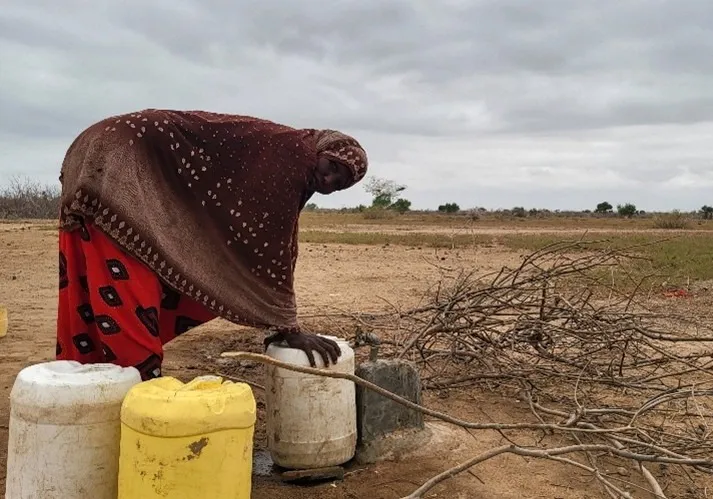
For more than twenty years, Fozia Mohamed has called Bulla 2 in Baraki location, Dadaab, Kenya home. A mother of six and wife of Mzee Mohamed Sheikh, Fozia is a pastoralist who spent much of her life balancing household responsibilities with the daily struggle of securing water for her family. Every morning, she would travel nearly two kilometres to the Baraki water point, using a donkey cart to transport water back home. The journey was long and exhausting — due to high demand at the water source, she often spent over three hours waiting and collecting. During the dry season, when livestock remained closer to home and queues grew even longer, the burden only deepened.

The daily reality for Fozia was one of relentless physical effort and lost time. The two-kilometre walk, the long hours at the water point, the strain of managing a household of eight on the other side of exhaustion — all of it chipped away at what was possible. Cooking a midday meal for her children was out of reach. Planning for the future felt like a luxury. She remained active in community affairs, serving on the local water committee, and together with her neighbours formally requested support from the County Department of Water — but relief was slow to come. During Ramadan, the burden intensified further.

“During Ramadan, it was extremely difficult. The time and energy spent fetching water made it hard to man age the household and care for the children.”

Fozia Mohamed

Through a joint project implemented by CARE and the County Department of Water, a pipeline extension was constructed to reach Baraki Bulla 2. The intervention included the installation of two elevated 10,000-litre water tanks and a rehabilitation of the solar infrastructure powering the entire water scheme. The project has brought clean, reliable water access to approximately 200 households — a third of the total population in Baraki location. Fozia’s years of advocacy through the local water committee had helped lay the groundwork for this change.

For Fozia, the transformation is immediate and tangible. What was once a two-kilometre trek is now a 100-metre walk from her door. What once consumed three or more hours of her day now takes less than thirty minutes. The hours she has reclaimed are already reshaping family life — she can cook lunch for her children, something that simply wasn’t possible before. The mental space that water stress once occupied is beginning to open up into something new: possibility.

“Now I am able to cook lunch for my children. Before, this was not possible because I spent so much time fetching water.”

Looking Ahead With water no longer a daily crisis, Fozia is daring to plan. She dreams of opening a small retail shop — a way to generate income, support her six children, and build something lasting for her family. “In the future I would like to do business,” she says. “Now that I have time and water is not a problem, I can think about opening a shop.” Her story is a reminder that for families in arid and semi-arid regions, improved water access is far more than a matter of convenience — it restores time, dignity, and the freedom to imagine a different future. In Baraki Bulla 2, a shorter walk for water is already becoming a longer path toward a better life.

Back to Top